Game Maker
Lesson 1: Lotería Toss — Data, Distribution, and Identity Through Play
Students explore how data is created through play in a Lotería-inspired tossing game that combines identity, culture, movement, and chance.
Overview
Students explore how data is created through play by participating in an active Lotería-inspired tossing game that combines identity, culture, movement, and chance. Students create personalized word-and-image cards, generate real class data through gameplay, and reflect on how game design choices influence patterns and outcomes. Throughout the lesson, students practice the Data Habit of Mind of Understanding Context by considering how the rules, materials, players, environment, and purpose of a game help explain the data that is generated.
Student Objectives
- ✓ I can generate and collect data through gameplay.
- ✓ I can notice patterns, clusters, and repetition in data.
- ✓ I can reflect on how design choices influence data results.
- ✓ I can use context to explain why patterns and results appear in data.
At a Glance
Total: about 45 minutes-
Launch — connect to SEL and Data Habits of Mind
4 min · Slides 3–6
Introduce the lesson and begin with an SEL check-in — "Which game represents how you are entering this space?" Describe the lesson flow and review classroom agreements.
-
Engage — connect to games and data
3 min · Slides 7–10
Invite students to think about their favorite analog game. Share the lesson's driving question — "How does play create data, and how do game design choices shape the results?" Introduce the Data Habit of Mind: understanding context, and connect how rules, materials, and the purpose of a game influence the data it generates.
-
Context — connect to culture and identity
5 min · Slides 11–13
Introduce traditional and modern versions of Lotería. Invite students to discuss words and images that stand out and how games can reflect culture and identity.
-
Create — make a class Lotería deck
12 min · Slides 14–18
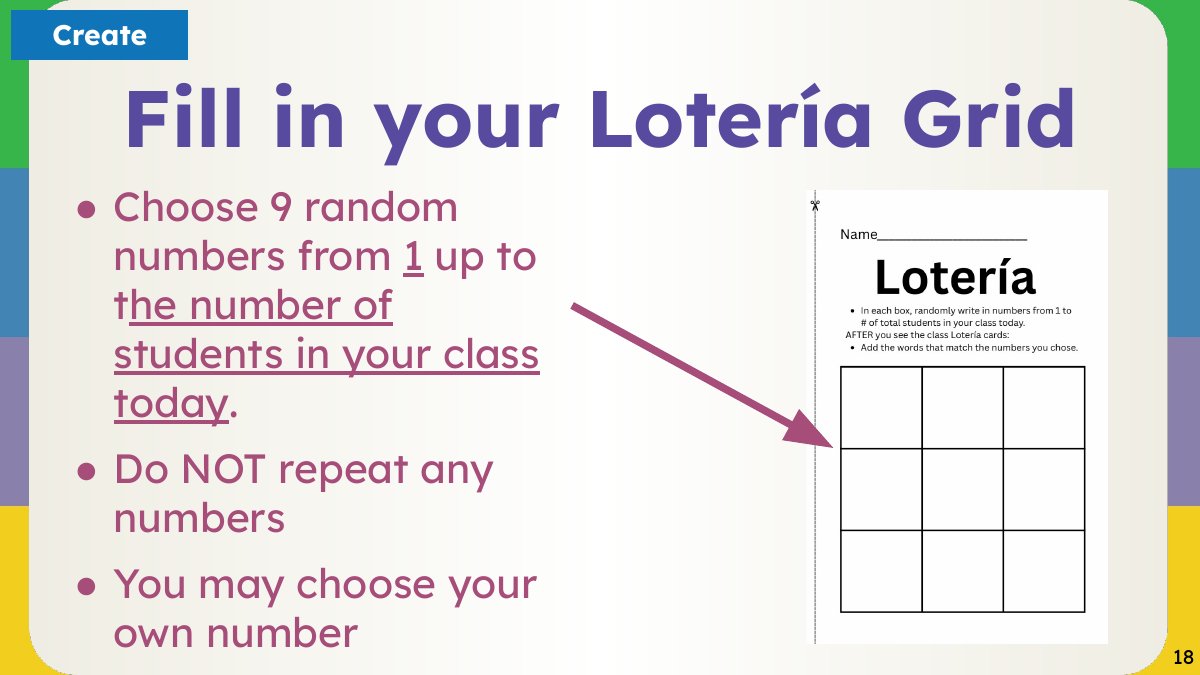
Introduce a new game variation (Lotería Toss). Students create their Custom Word Card (left side) using a meaningful noun and an image, then choose numbers (from 1 to the number of students in class) to make their Lotería Grid (right side).
-
Prepare — set up to play Lotería Toss
4 min · Slides 19–21
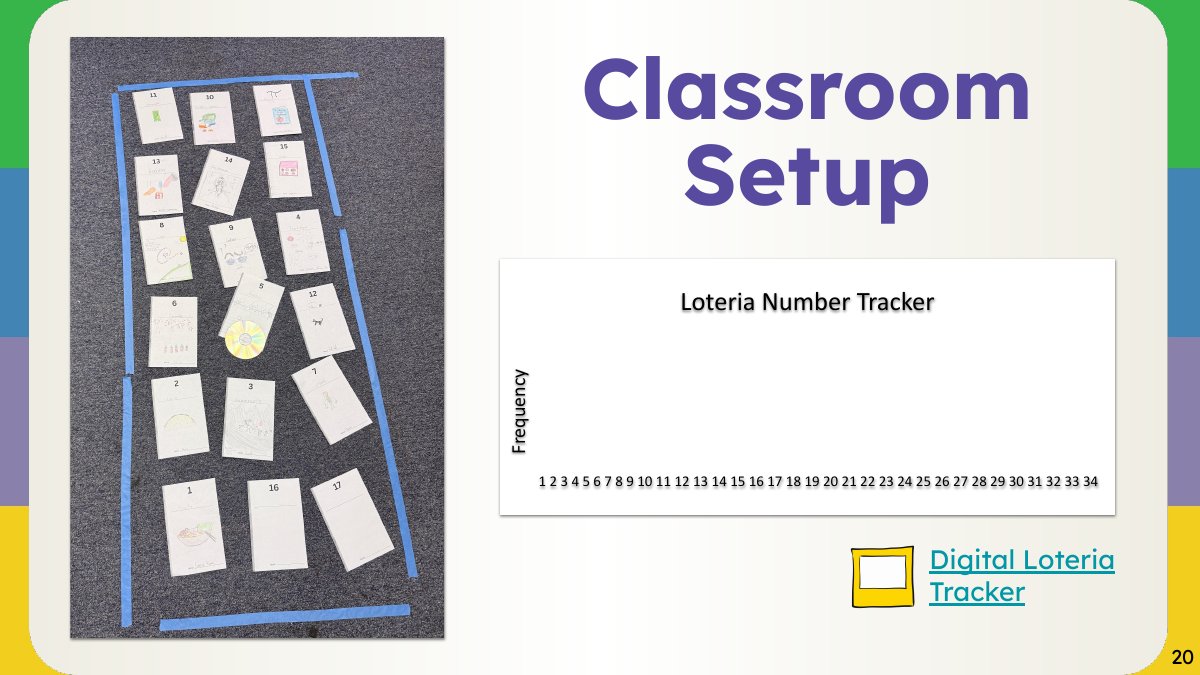
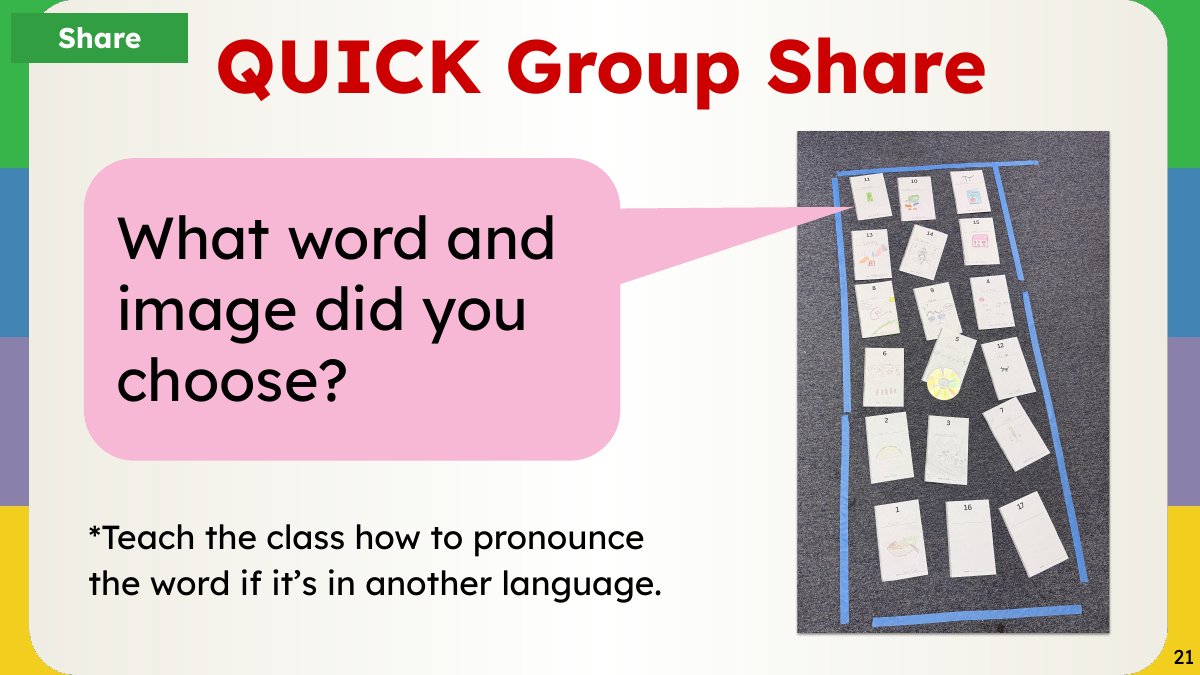
Set up the game board using the students' Lotería Cards, leaving room for students to gather around. Show how to collect data and track the frequency of numbers using the Lotería Number Data Tracker (digital or physical poster). Invite students to share their chosen words and images.
-
Collect data — play Lotería Toss and chart frequency
10 min · Slides 22
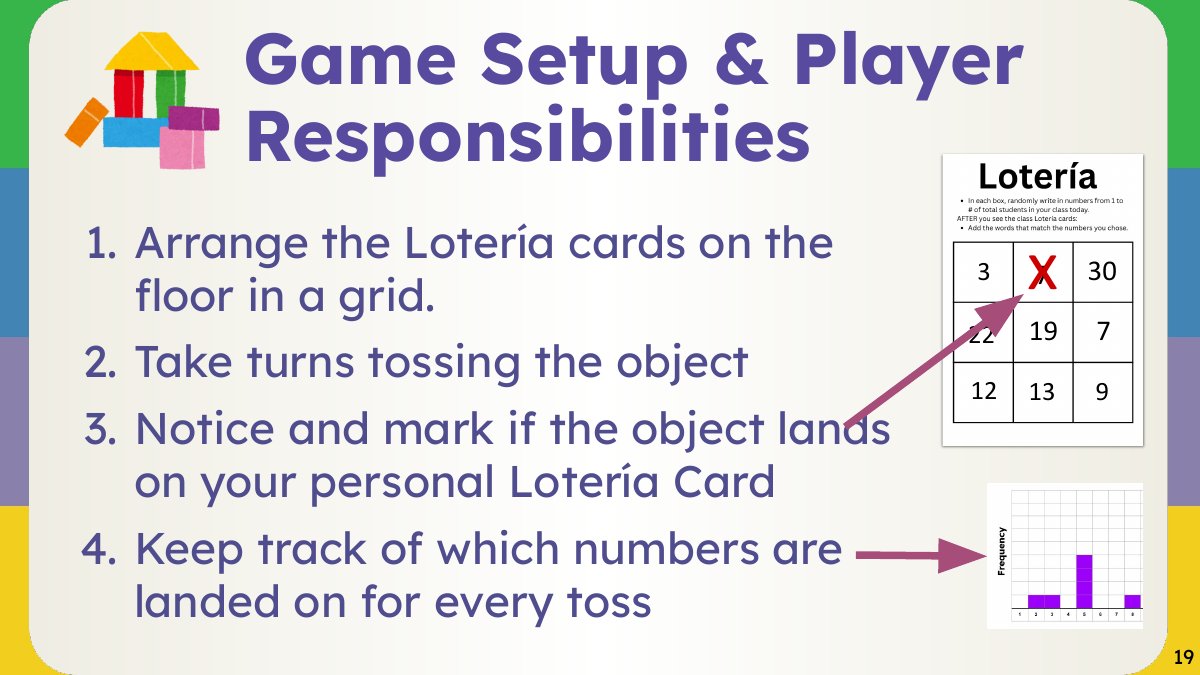
Have students take turns tossing an object (such as a bean bag) onto the class Lotería game board, recording the frequency and marking off numbers on their own Lotería Grids.
-
Reflect — connect game design and data, identify Data Habits of Mind
5 min · Slides 23–24
Students reflect on patterns in the data, possible causes, fairness, and how changing game design elements could create different outcomes. Discuss how understanding context showed up in the lesson.
-
Close — check on emotions
2 min · Slides 25
Have students check on their emotions and identify how they feel at the end of the lesson.
| Section | Time | Slides | What happens |
|---|---|---|---|
| Launch — connect to SEL and Data Habits of Mind | 4 min | 3–6 | Introduce the lesson and begin with an SEL check-in — "Which game represents how you are entering this space?" Describe the lesson flow and review classroom agreements. |
| Engage — connect to games and data | 3 min | 7–10 | Invite students to think about their favorite analog game. Share the lesson's driving question — "How does play create data, and how do game design choices shape the results?" Introduce the Data Habit of Mind: understanding context, and connect how rules, materials, and the purpose of a game influence the data it generates. |
| Context — connect to culture and identity | 5 min | 11–13 | Introduce traditional and modern versions of Lotería. Invite students to discuss words and images that stand out and how games can reflect culture and identity. |
| Create — make a class Lotería deck | 12 min | 14–18 | Introduce a new game variation (Lotería Toss). Students create their Custom Word Card (left side) using a meaningful noun and an image, then choose numbers (from 1 to the number of students in class) to make their Lotería Grid (right side). |
| Prepare — set up to play Lotería Toss | 4 min | 19–21 | Set up the game board using the students' Lotería Cards, leaving room for students to gather around. Show how to collect data and track the frequency of numbers using the Lotería Number Data Tracker (digital or physical poster). Invite students to share their chosen words and images. |
| Collect data — play Lotería Toss and chart frequency | 10 min | 22 | Have students take turns tossing an object (such as a bean bag) onto the class Lotería game board, recording the frequency and marking off numbers on their own Lotería Grids. |
| Reflect — connect game design and data, identify Data Habits of Mind | 5 min | 23–24 | Students reflect on patterns in the data, possible causes, fairness, and how changing game design elements could create different outcomes. Discuss how understanding context showed up in the lesson. |
| Close — check on emotions | 2 min | 25 | Have students check on their emotions and identify how they feel at the end of the lesson. |
Materials & Prep
- Student Handout — Custom Lotería Cards and My Lotería Grid1 per studentPrint single-sided, then cut in half. The number of pages should equal the number of students in your class. Blank Lotería cards are included at the end — duplicate as many as needed and write in numbers up to the number of students.
- Lotería Inspiration Images (optional)1–2 sheets per groupProvide pre-printed images if creating their own is a barrier for students.
- Objects to tossFor example, bean bags, masking tape rings, or small paper plates (3–6 total for the class).
- Markers, colored pencils, or crayons
- Sentence starters and visual vocabulary cards (optional)
- Examples of Lotería images (optional)
- Internet access and a computer with projectorNeeded to show the slides.
- Study classroom? Check your classroom kit before printing or gathering materials. The Unpack your classroom kit videos on Getting Started show what is in each box and how it is organized.
- Decide how materials will be distributed (stations or packets).
- Confirm the number of Lotería Cards matches the exact number of students in your class. Remove extra printed cards if there are too many.
- Set up the classroom space for the Lotería Toss game.
- Locate an open space (approximately 5 x 7 feet for the game grid, plus room for students to gather around).
- Display the Lotería Number Data Tracker (digital poster) or make a similar physical poster marked with numbers from 1 to the number of students in your class.
- Optional: save or photograph the Lotería Number Data Tracker (digital or physical poster) to show in Lesson 2.
Slides & Teaching Guide
How to use these speaker notes
Every slide's notes follow the same four labels so you can find what you need at a glance.
- Time:
- Approximate pacing for the slide.
- Example Script:
- Suggested language to say to students. Paraphrase freely to match your voice.
- Do:
- Appears only when a specific action or facilitation move is needed (invite a volunteer, collect a data sheet, etc.). If you don't see a "Do" line, the script is all that's needed.
- Purpose:
- Why the slide is here and what it's building toward in the lesson.
-
Slide 2 · Lesson 1
No teaching notes for this slide.
-
Slide 3 · GAME MAKER
30 secondsWelcome to the Game Maker Data Adventure. Over the next few lessons, we’ll become game designers, players, and data detectives as we explore how games create data and how design choices change results.
Purpose: Signal transition into lesson day. Frame expectations.
-
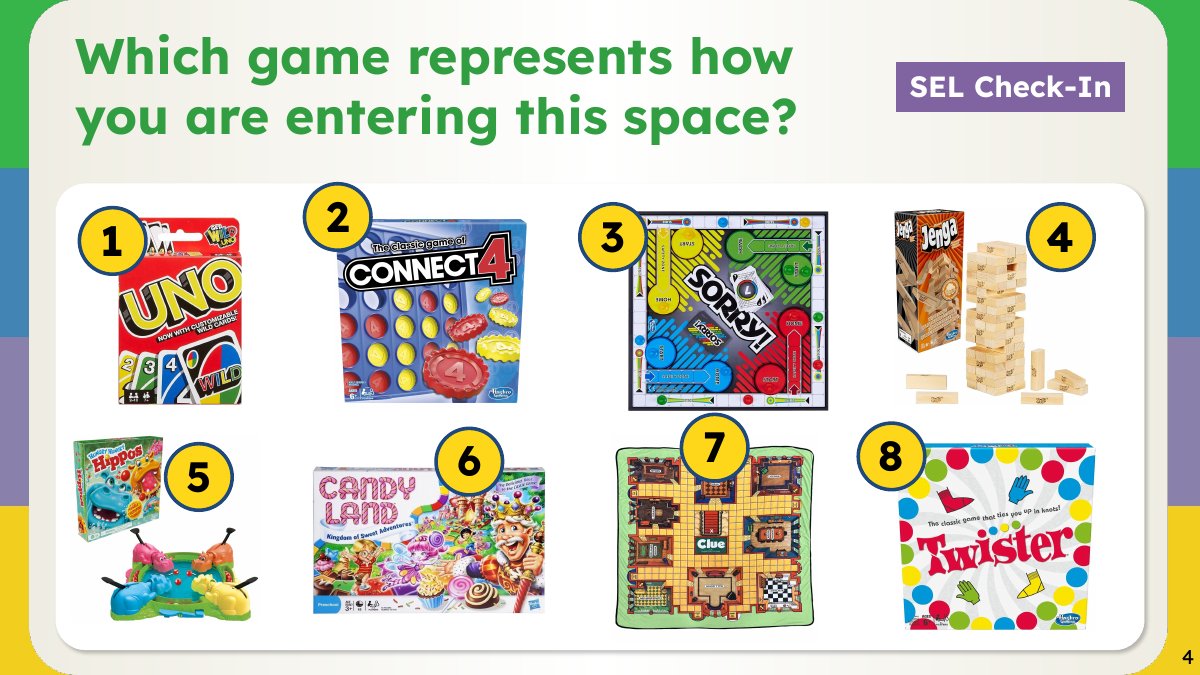
Slide 4 · Which game represents how you are entering this space?
3 minutesWhich game represents how you are entering this space today? There’s no right answer. Pick one that matches your energy, mood, or mindset.
Do: After students choose, ask them to turn and share why they picked that game.
Purpose: Welcome and regulation activity
-
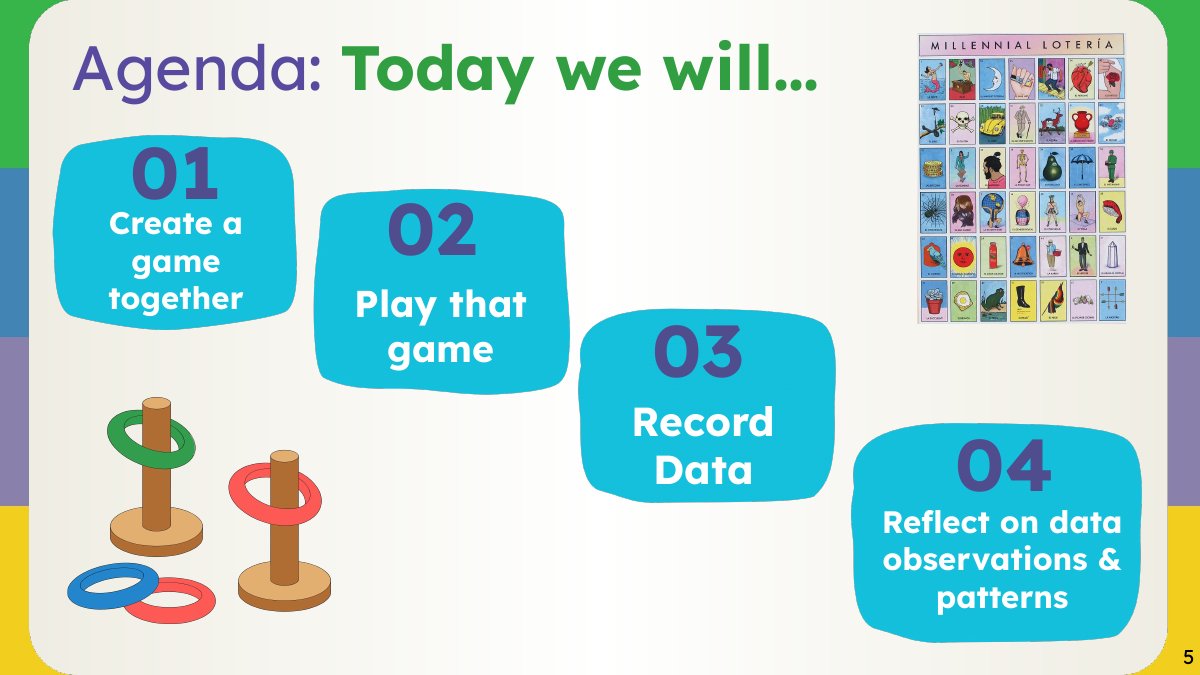
Slide 5 · 02
30 secondsToday we will create a game together, play that game, create data, and reflect on patterns we notice in the data.
Purpose: Agenda overview
-
Slide 6 · Classroom Agreements
1 minuteDo: Review Community Agreements
Purpose: Agreements
-
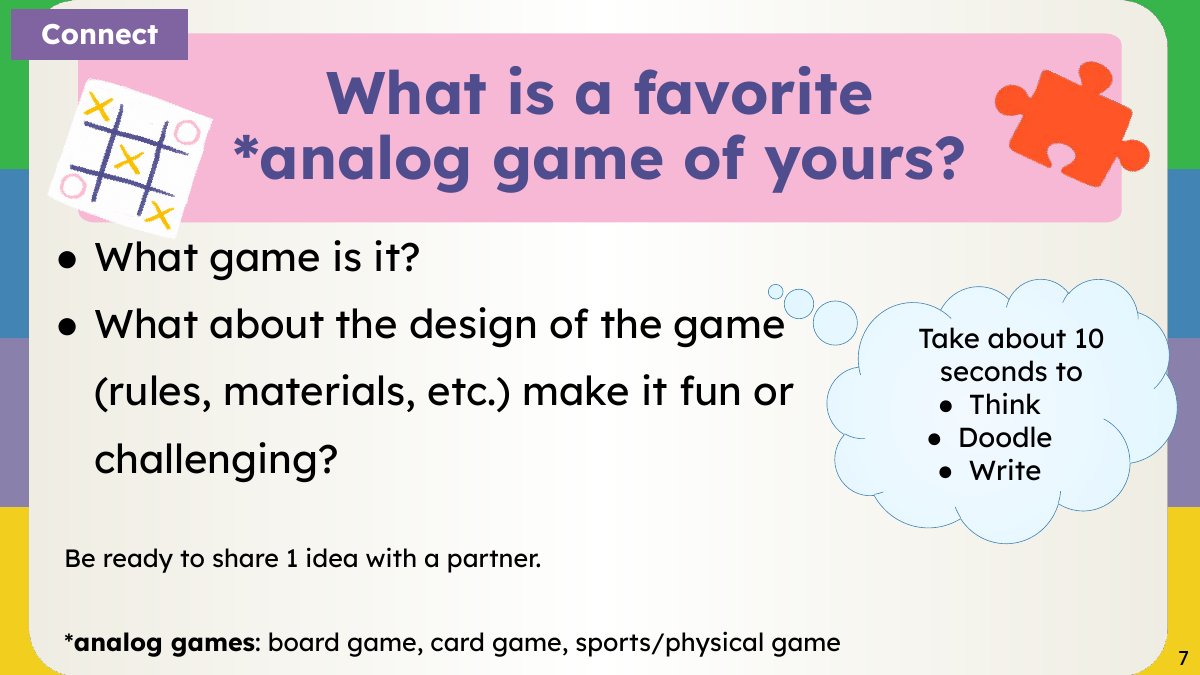
Slide 7 · What game is it?
2 minThink about a favorite analog game. What game is it? What about the design of the game, such as the rules, materials, or gameplay, makes it fun or challenging? (Pause 10-15 seconds) Turn and share one idea with a partner.
Purpose: Connector: Students begin thinking about game design choices before the driving question.
-
Slide 8 · How does play create data, and how do game design choices shape the re
1 minAs we go through today's lesson, I want you to keep this question in mind:How does play create data, and how do game design choices shape the results? You don't need to answer it right now. We'll come back to this question as we create a game, collect data, and analyze the results.
Do: Post and reference it throughout the lesson. Connect student activities and reflections back to the question.
Purpose: Anchors inquiry for lesson 1, doesn’t need to be answered now, but will build over the course of the lesson.
-
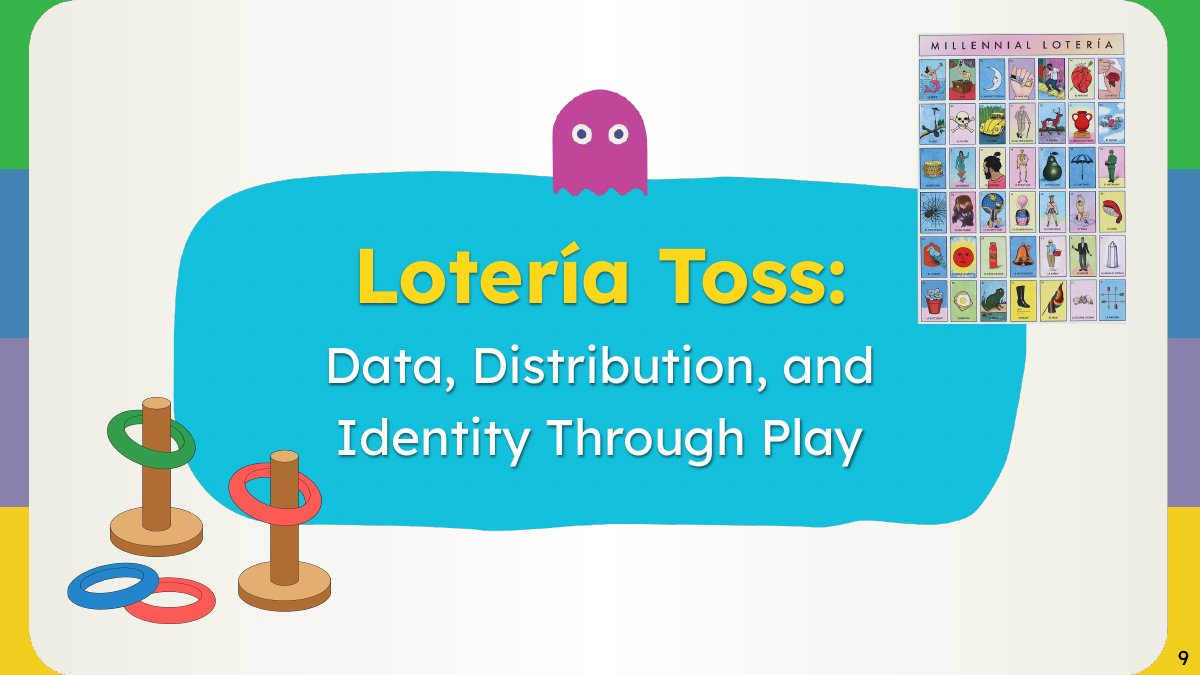
Slide 9 · Data, Distribution, and Identity Through Play
30 secToday’s lesson is called Lotería Toss. We’ll use play to create data—and then figure out what that data is telling us.
Purpose: Transition to activity context
-
Slide 10 · Today’s Data Habit of Mind
2 min‘Today's Data Habit of Mind is Understanding Context. Context is the background information that helps us make sense of data. When we look at data, the numbers alone don't tell the whole story. We also need to understand what was happening when the data was created. For games, context includes things like: the rules the materials the players the environment and the purpose of the game. Throughout today's lesson, pay attention to moments when understanding the context helps explain why the data turns out the way it does.
Do: (Optional: model ASL sign)
Purpose: Data Habit of Mind grounding and connection to game data
-
Slide 11 · Lotería: A Game with History
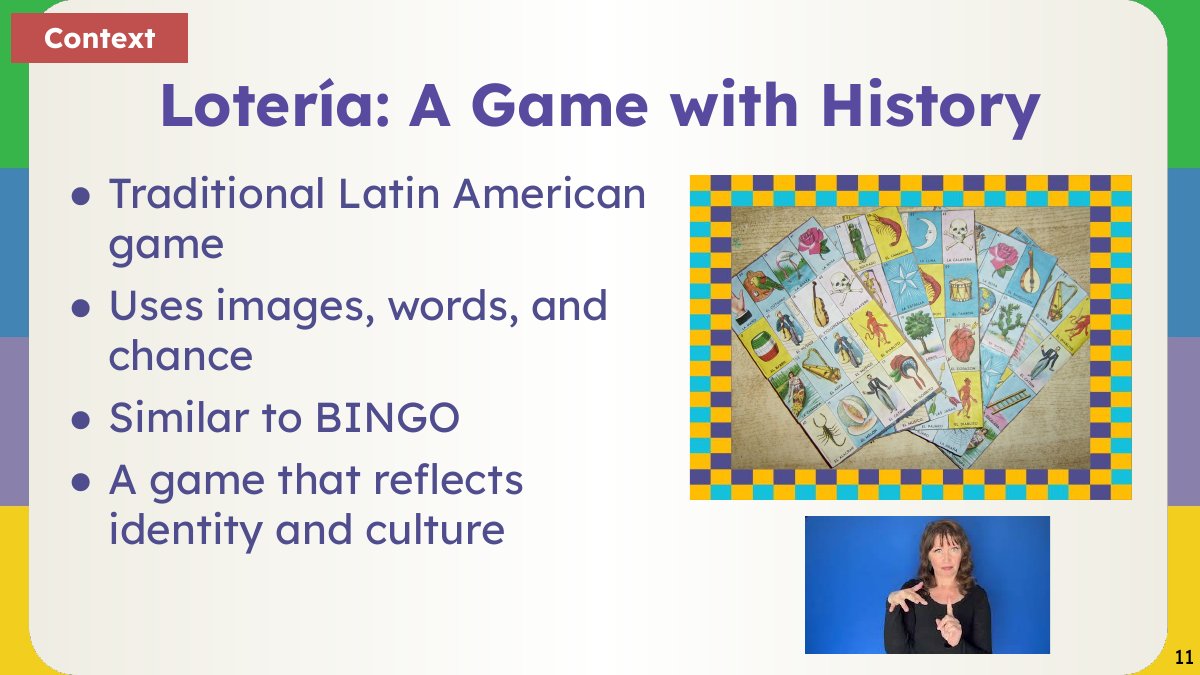
30 secLotería is a traditional Latin American game—kind of like Bingo—but it also uses images representative of the culture.
Do: If anyone in your class is familiar with this game & wants to share, have them share what they know about this game.
Purpose: Cultural grounding & relevance
-
Slide 12 · Updated Lotería
4 minAs you watch, notice: the words and images that appear how the game has been updated and what these choices tell us about the people or communities represented. You may also get ideas for the words and images you'll choose later when creating your own card.
Do: Play video
Purpose: To give students an idea about what images and words they can choose for their Loteria card.
-
Slide 13 · What kinds of words or images stand out?
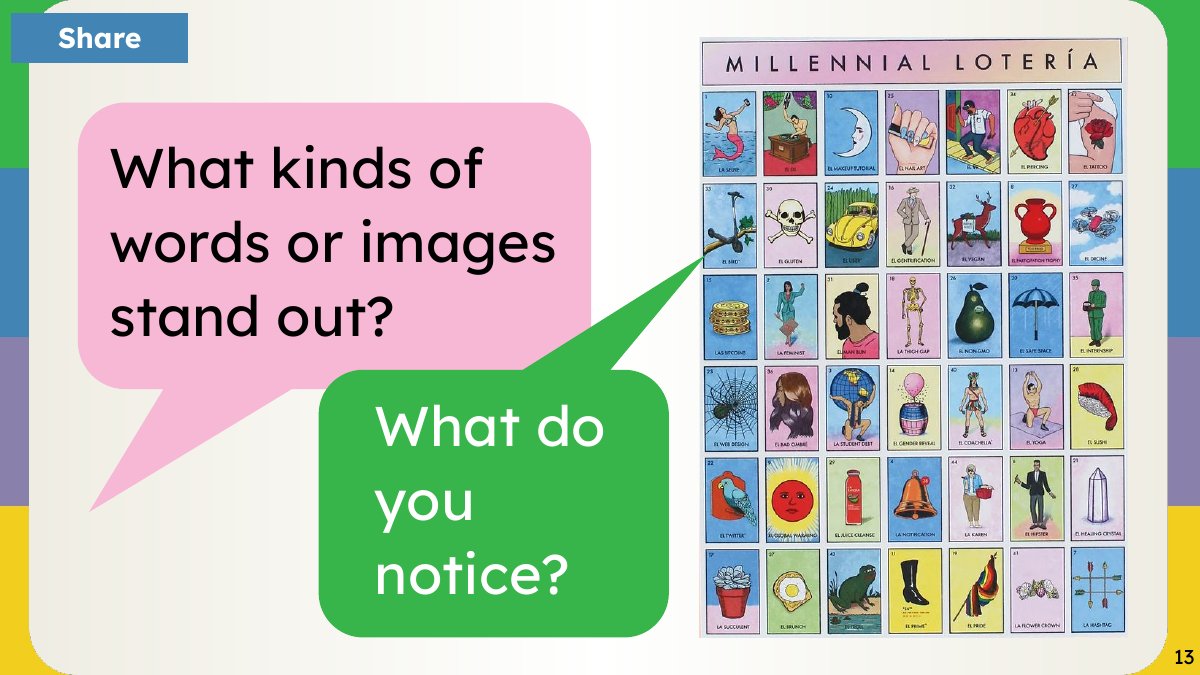
1 minTurn and talk OR whole group share: What did you notice? What stood out?
Purpose: Quick processing
-
Slide 14 · Lotería
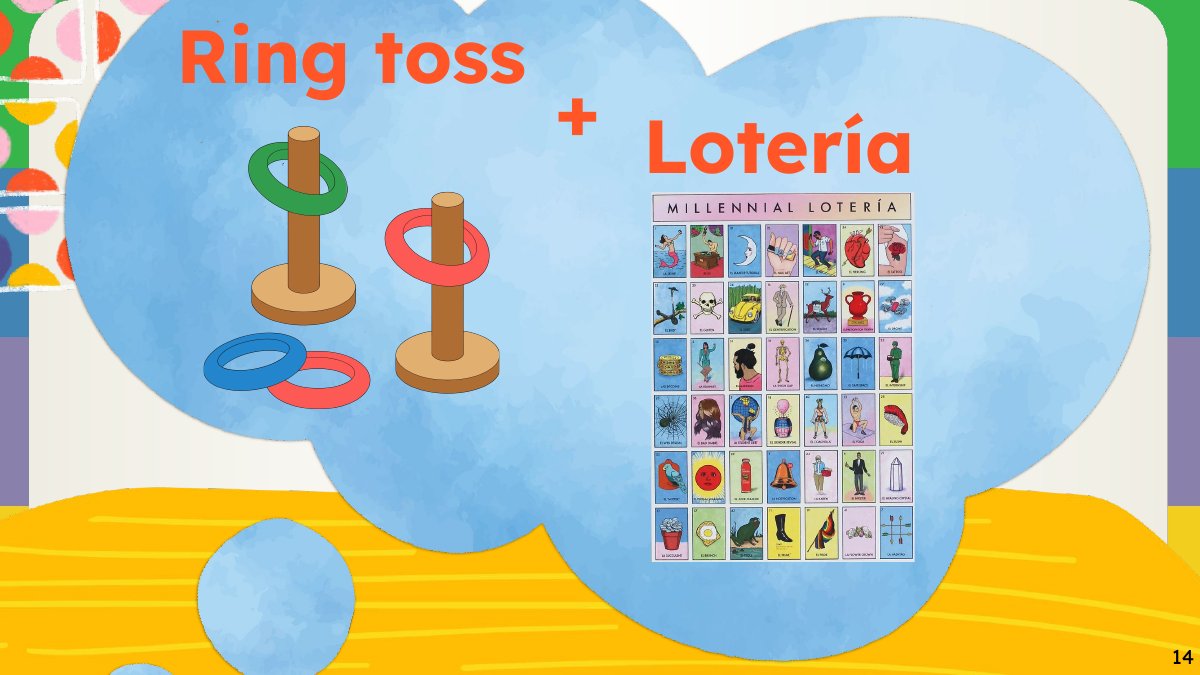
1 minToday we're combining two different games: Ring Toss and Lotería. Together they'll create a new game called Lotería Toss. We'll create it, play it, collect data from it, and then analyze how the design of the game influenced the results.
Purpose: Reconnect to the driving question now that there is context behind the game Loteria.
-
Slide 15 · Goal of Lotería Toss
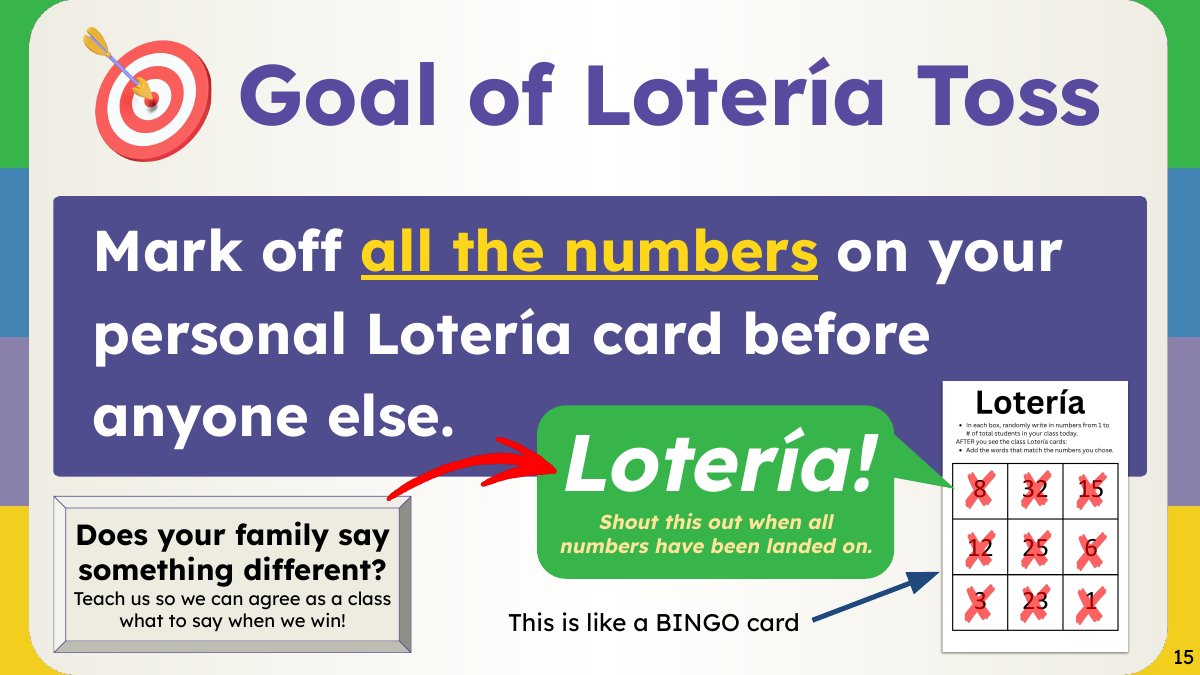
2 minThe goal of this game: be the first to complete a blackout on your card. When you do—shout ‘Lotería! We’ll learn more about how to do this as we go over the setup and rules.
Purpose: Define success condition for the game
-
Slide 16 · Lotería Toss
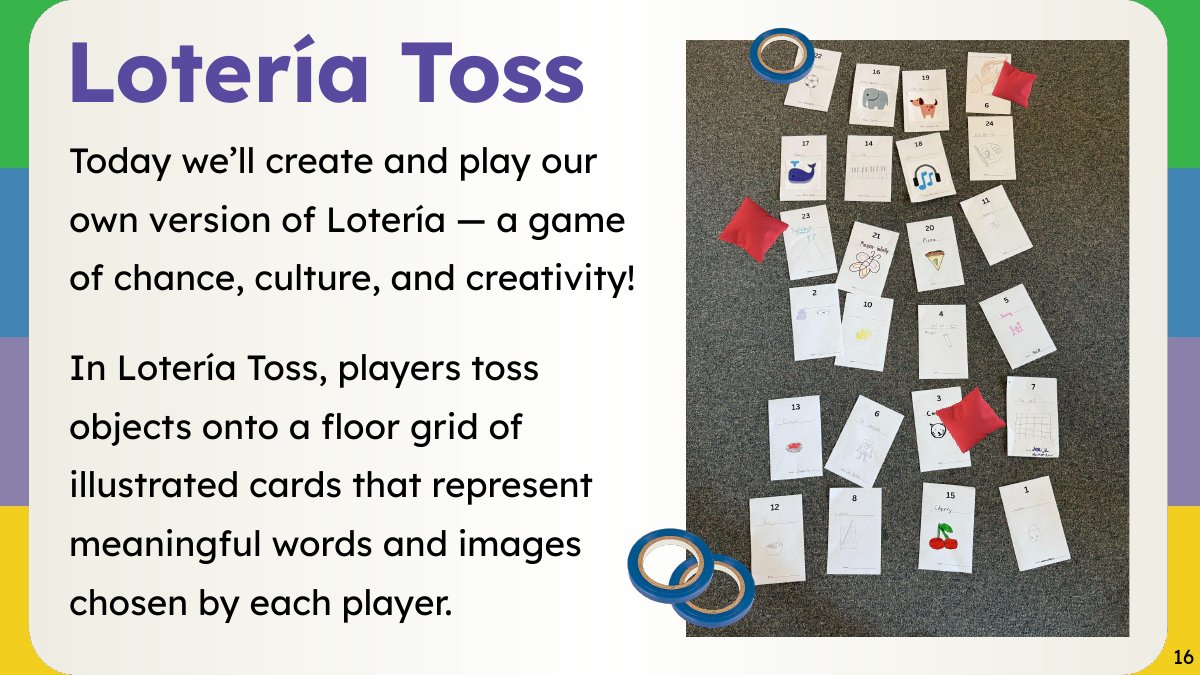
1 minToday we’ll create and play our own version of Lotería — a game of chance, culture, and creativity! In Lotería Toss, players toss objects onto a floor grid of illustrated cards that represent meaningful words and images chosen by each player.
Purpose: Ownership & identity
-
Slide 17 · Make Your Custom Word Card
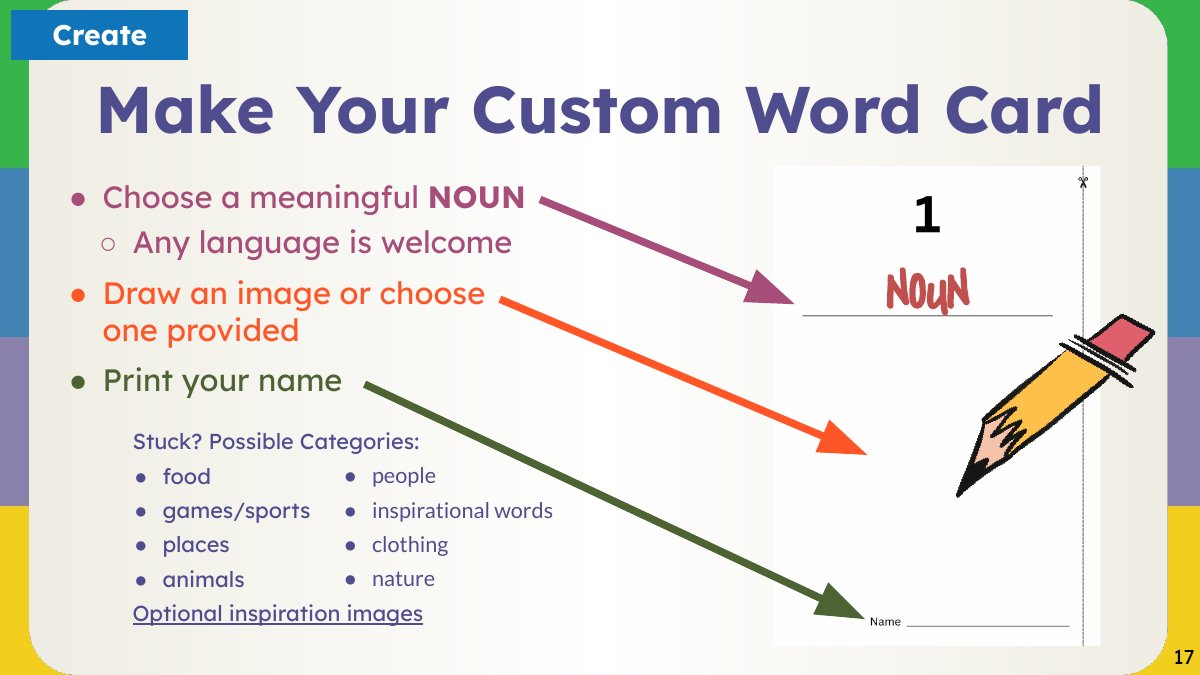
6 minutes maxYou will now make a word and image card and this will become part of our custom Lotería board. Choose a meaningful NOUN (any language is welcome). Drawn an image or choose one provided. Print name on the bottom.
Purpose: Activity for students to create cards. Makes connections and increases buy in.
-
Slide 18 · Fill in your Lotería Grid
2 minNow fill your Lotería card with 9 different numbers. No repeats. You can choose any number from 1 up to the number of students in our class. It is okay to chose the number from the card you made, but you don’t have to.
Do: Give an example of filling out 9 random numbers that match the number of students in your class.
Purpose: Prep for gameplay
-
Slide 19 · Game Setup & Player Responsibilities
1 minGrab your Lotería image and number cards and listen carefully to the setup the game. These are the steps and what we will do. 1. Arrange the Lotería cards on the floor in a grid. 2. Take turns tossing the object 3. Notice and mark if the object lands on your personal Loteria Card 4. Keep track of which numbers are landed on for every toss.
Purpose: Explain structure
-
Slide 20 · Digital Loteria Tracker
1 minWe’re tracking frequency—which numbers show up most. Our data tracker will help us record the data.
Do: Open the Digital Loteria Tracker
Purpose: Introduce data concept simply
-
Slide 21 · QUICK Group Share
4 minLet’s start from the top row sharing the word/image that you chose. If it’s a word in another language, we’ll listen and repeat the word you’re teaching us.
Purpose: Identity and language development
-
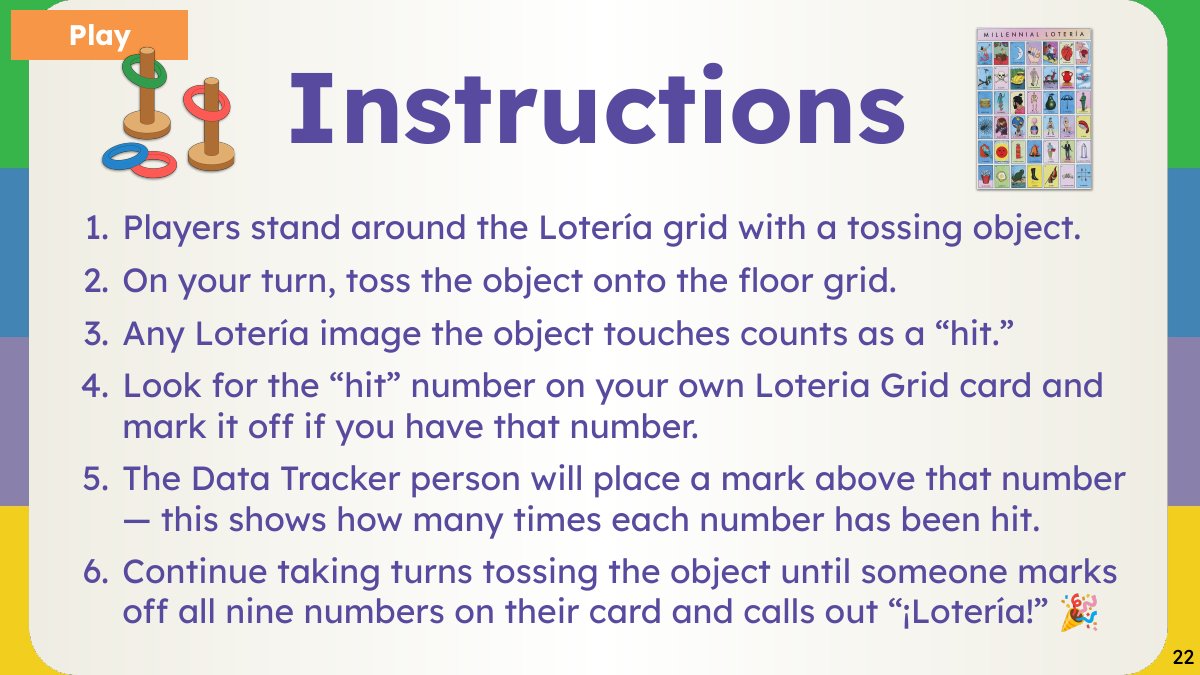
Slide 22 · Instructions
10 minutes max (Game Play)Let’s review the rules of the game. [Read through together with students]
Purpose: Gameplay where the teacher / student tracks class data.
-
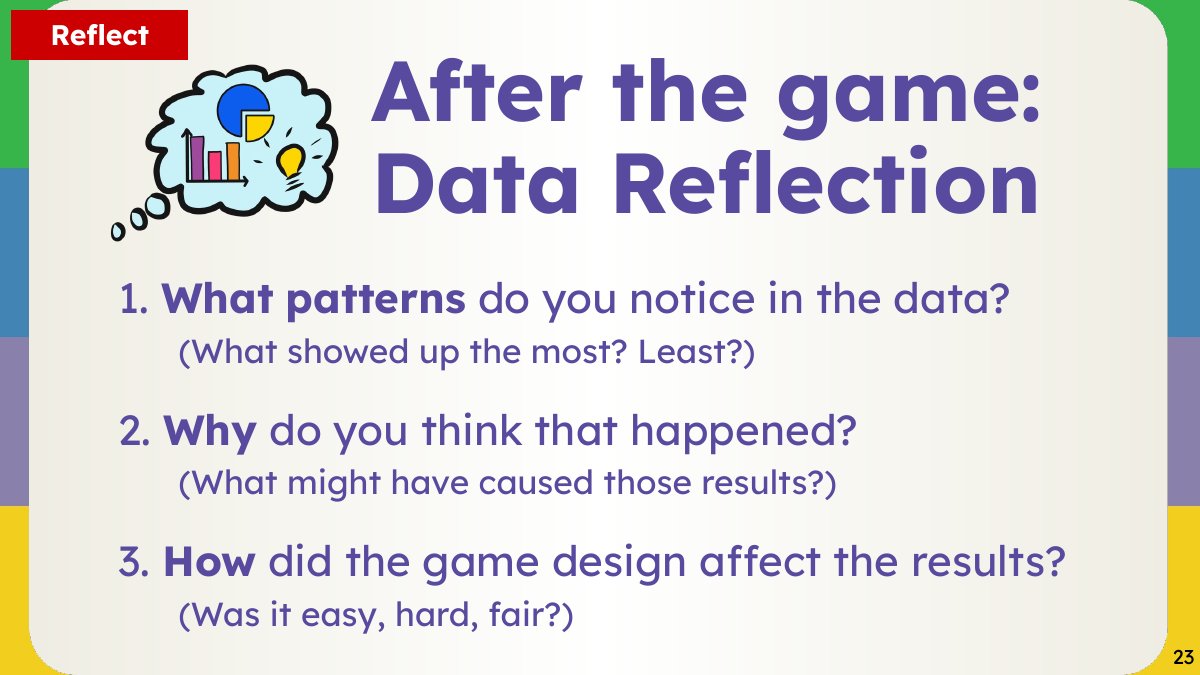
Slide 23 · After the game:
3 minNow that we’ve played. Let’s take a look at the data. What did you notice?
Purpose: Reflection and data discussion
-
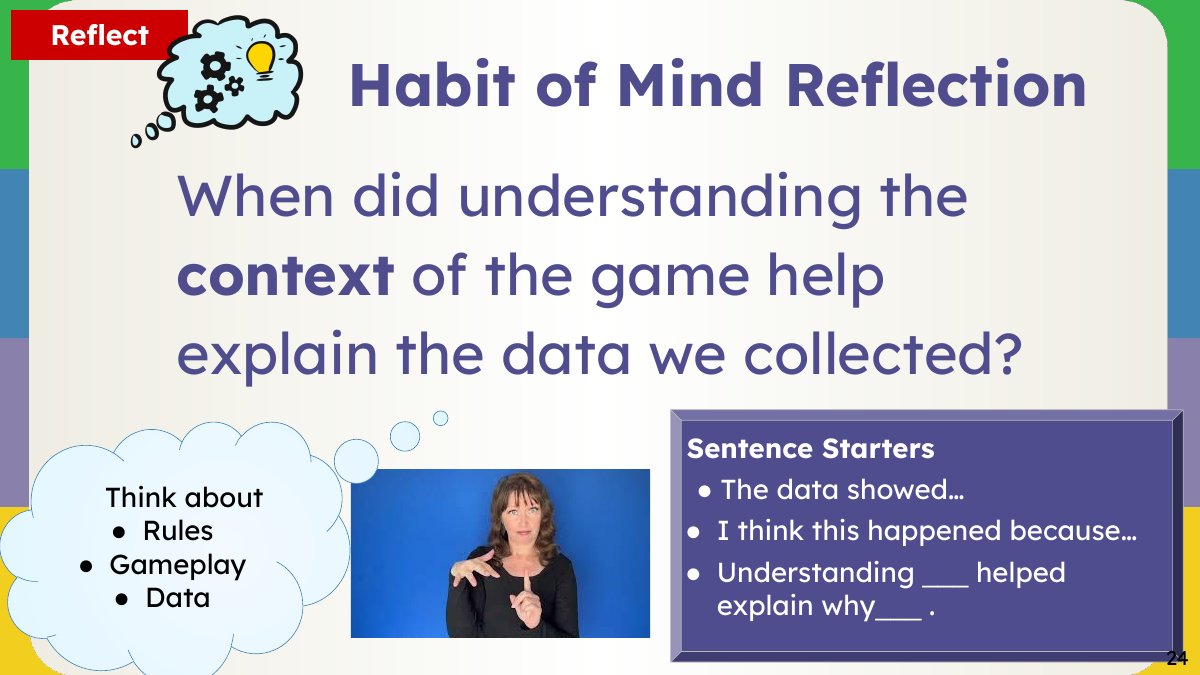
Slide 24 · Habit of Mind Reflection
2 minDo: Read the reflection question and have students share with a partner/whole class.
Purpose: Reflection on Data Habit of Mind
-
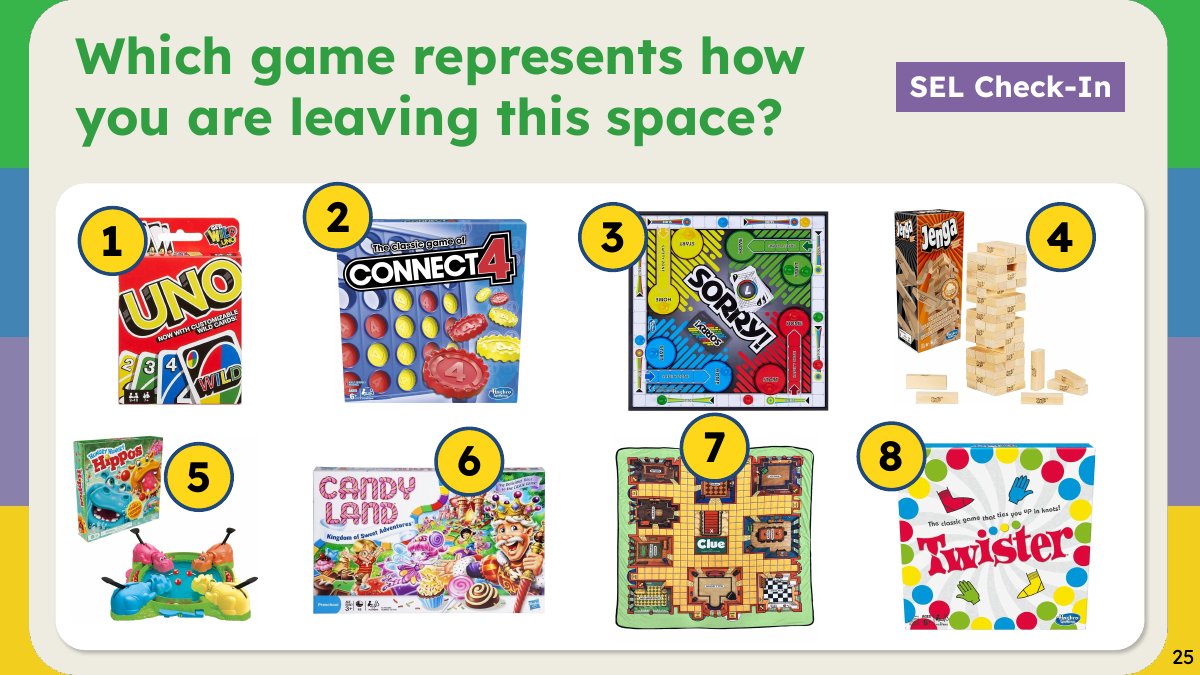
Slide 25 · Which game represents how you are leaving this space?
1 minTake note of how you are feeling right now. Which game represents how you are leaving this space today? Has anything changed?
Purpose: Regulation